


Dancer. Choreographer. Founder of the European ballroom community. Lasseindra Lanvin is all of this. In April (Fri 25/04), the multi-talented artist will come to Kortrijk with her most recent performance ‘Chamanik’, in which she combines elements of voguing - a dance style that originated in the New York LGBTQ+ ballroom scene - with African spirituality. “With ‘Chamanik’, I want to honor my culture and ancestors,” she says. “At the same time, the performance is a ritual that takes the audience out of their comfort zone.”
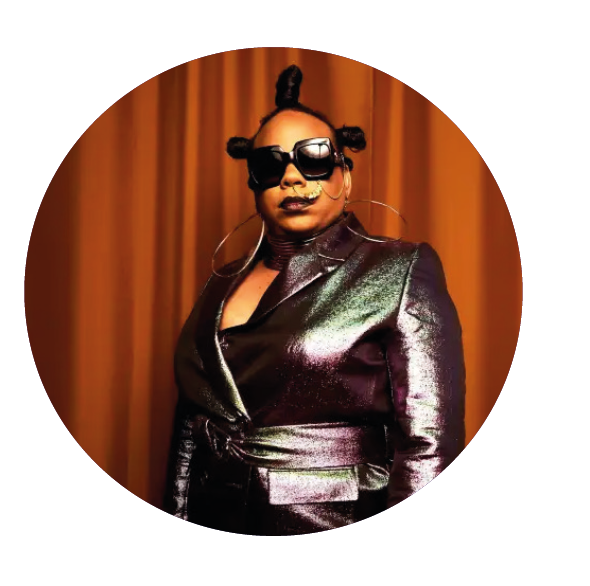
“I was born in 1986 in the south of France, but grew up in French Guiana. I started dancing at a very young age, mainly ballet and jazz. When I was around 14, I attended a dance school in New York, and a friend secretly took me to the legendary Christopher Street Pier, an underground and largely gay scene where I first came into contact with ballroom and vogue.”
LASSEINDRA LANVIN - Interview Birte Govaerts
What attracted you to vogue?
“It was mainly vogue femme (a style of voguing that emphasizes feminine movements, editor's note) that really appealed to me. I could apply the techniques I had learned during my classical dance training in a completely new way. That felt extremely liberating. Also, the femininity of the genre appealed to me greatly.”
You've been in the scene for about twenty years now. What has changed since then?
“The biggest change is that the ballroom scene existed only in New York twenty years ago. Now, ballroom has also spread to Europe. That is to say: I launched it here with my good friend Nikki Gorgeous Gucci. Together, we founded the Eurasian chapter of the International & Iconic House of Ninja. (a house is an organization within the ballroom community where people can unite and serves as a support system, editor's note.)
In 2011, we organized our first French ball together in Paris. I am still very active in the European ballroom scene, but I am now part of a different House, namely the Exclusive House of Lanvin.”
Ballroom and vogue are gaining popularity. Does that make you proud?
“On one hand, yes, on the other hand, no. It is no longer an underground scene, and that has both advantages and disadvantages. The advantage is that even more people are getting to know ballroom and voguing, the disadvantage is that we receive not only positive but also negative reactions. You must not forget that there are still many people who have issues with the fact that gay people are so out.”
But you have created a world where everyone can just be themselves. Amazing!
“Ballroom has also helped me to truly look at myself and be completely myself; it has shaped me. I am a trans woman, and the scene has helped me find myself. I think it’s important to help others with that and support them in figuring out who they are. What they are good at. To let them shine.”
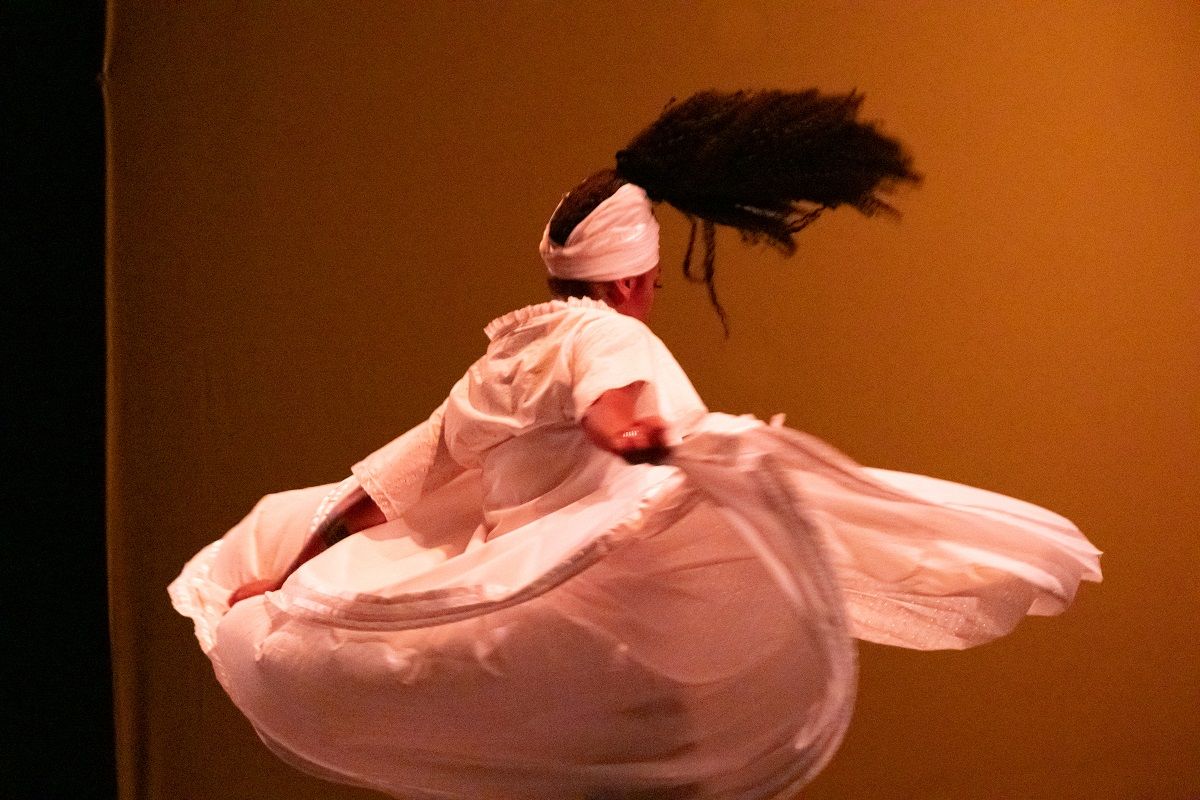


You are coming to Kortrijk with ‘Chamanik’. Can you tell us a bit more about this performance?
“‘Chamanik’ is about being proud of who and what you are, just like ballroom. At the same time, I want to honor my culture and my ancestors with this performance.”
"At the same time, the performance is a ritual that takes the audience out of their comfort zone."
In the performance, you combine voguing with African spirituality.
“That's right, but also with voodoo, shamanism, candomblé, and santeria. Most people are familiar with voodoo and shamanism. Candomblé is an Afro-Brazilian religion that is mainly found in Brazil, while santeria is a religion that originated in Cuba. In other words, we explore spiritual rituals from around the world and combine them with voguing.”
What do you hope the audience takes away from ‘Chamanik’?
“When you come to ‘Chamanik’, you need to be open to new experiences. I want to take the audience out of their comfort zone with this performance. I want them to feel a bit uncomfortable, even. When we first performed ‘Chamanik’ in France, at the Chaillot Théâtre national de la Danse, some people in the audience started crying. I don’t want to reveal too much, but you should not only view ‘Chamanik’ as a performance, but also as a ritual to purify yourself.”